Coral reefs are under increasing pressure from climate change and human activity, making it essential to develop fast, accurate, and cost-effective ways to monitor their health. Environmental DNA (eDNA) metabarcoding is emerging as a powerful tool for surveying marine life, and this study explores how well it can detect coral diversity.
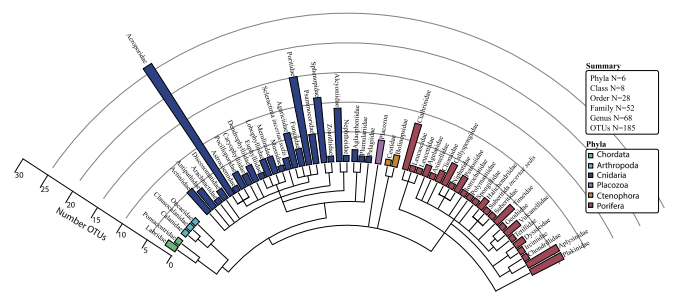
Researchers developed a new eDNA toolkit specifically targeting hard corals (Scleractinia) and tested it alongside traditional diver-based surveys at the Cocos (Keeling) Islands. Using three DNA assays (ITS2 and 16S markers), the toolkit successfully detected a broad range of coral and sponge diversity.
The eDNA approach recovered 78 coral ITS2 OTUs across 25 genera, closely matching the diversity recorded by divers (68 species across 26 genera). Some differences between eDNA and visual records likely reflect natural genetic variation, cryptic species, or challenges in visual identification.
The study shows that collecting surface water and analysing it with multiple eDNA assays can reveal fine-scale patterns in coral community composition. With ongoing improvements to reference databases and assay design, eDNA can complement — and enhance — traditional monitoring of coral reef ecosystems.
Read the full paper here.