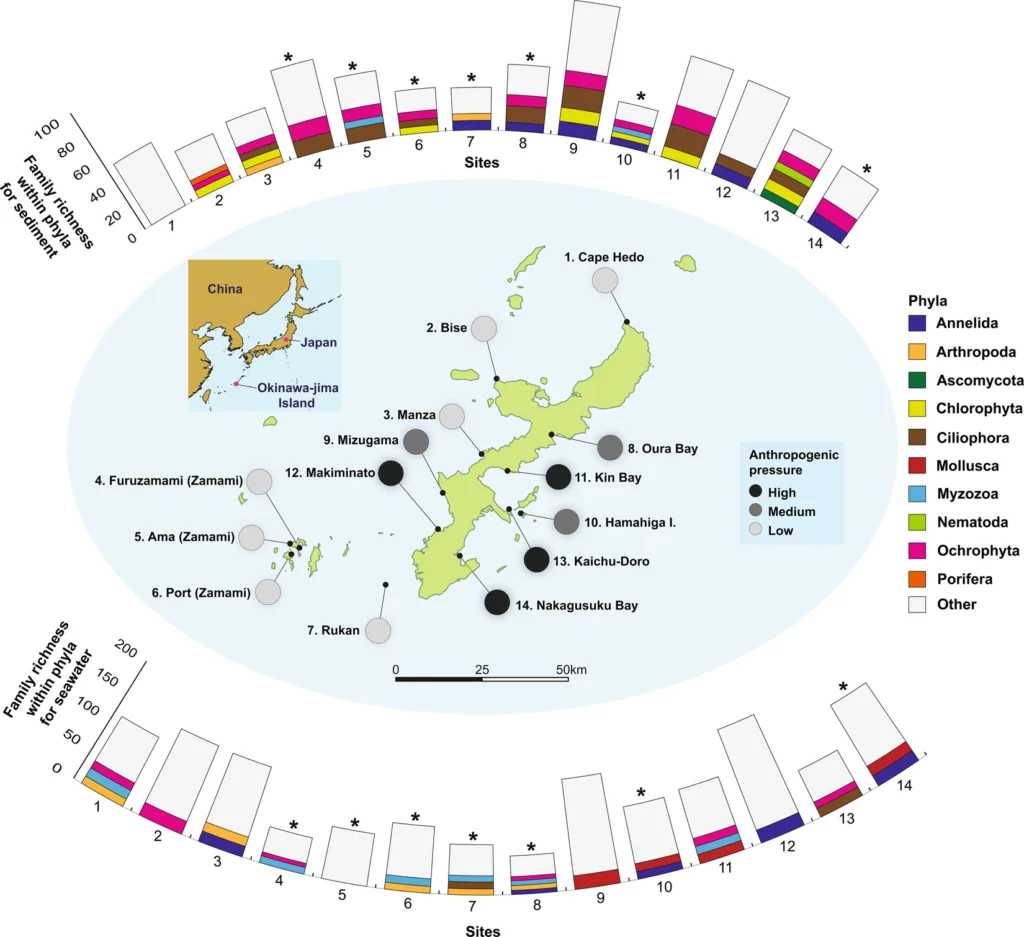
Biodiversity loss affects the productivity and stability of coastal ecosystems, yet it is rarely tracked across both time and space. This study uses environmental DNA (eDNA) metabarcoding—applied to sediment and seawater samples—to capture broad “snapshots” of marine life on subtropical coral reefs in Okinawa, Japan.
Using 18S rRNA sequencing (and a suite of modern analytical tools including machine-learning–based taxonomic assignment and co-occurrence network analysis), researchers examined how human disturbance influences reef biodiversity. The results show that family-level eukaryotic richness increases under medium to high disturbance, accompanied by major shifts in community structure: reduced connectedness among taxa, more fragmented ecological networks, and changes in indicator species.
Together, these patterns highlight eDNA’s power as a sensitive barometer of environmental disturbance and demonstrate how anthropogenic pressures reshape biotic networks on coral reefs.
Read the full article here.