This study demonstrates how environmental DNA (eDNA) can be used to monitor one of the world’s rarest birds — the critically endangered kākāpō. Researchers developed a soil-based metabarcoding protocol to detect kākāpō alongside other bird and mammal species at very fine spatial scales.
Using targeted nanopore sequencing and the high-quality kākāpō reference genome, they were able to extract species-specific DNA from soil and even identify individual kākāpō. By matching long-read DNA haplotypes with known genetic variation in the population, the team confirmed individual identities using existing distribution data.
These findings show that identifying individual animals from eDNA is now possible, opening the door for powerful new conservation tools. This approach has the potential to extend eDNA applications beyond species detection toward assessing genomic diversity, inbreeding, adaptive potential, and overall population health for rare and hard-to-monitor species.
Read the full article here.
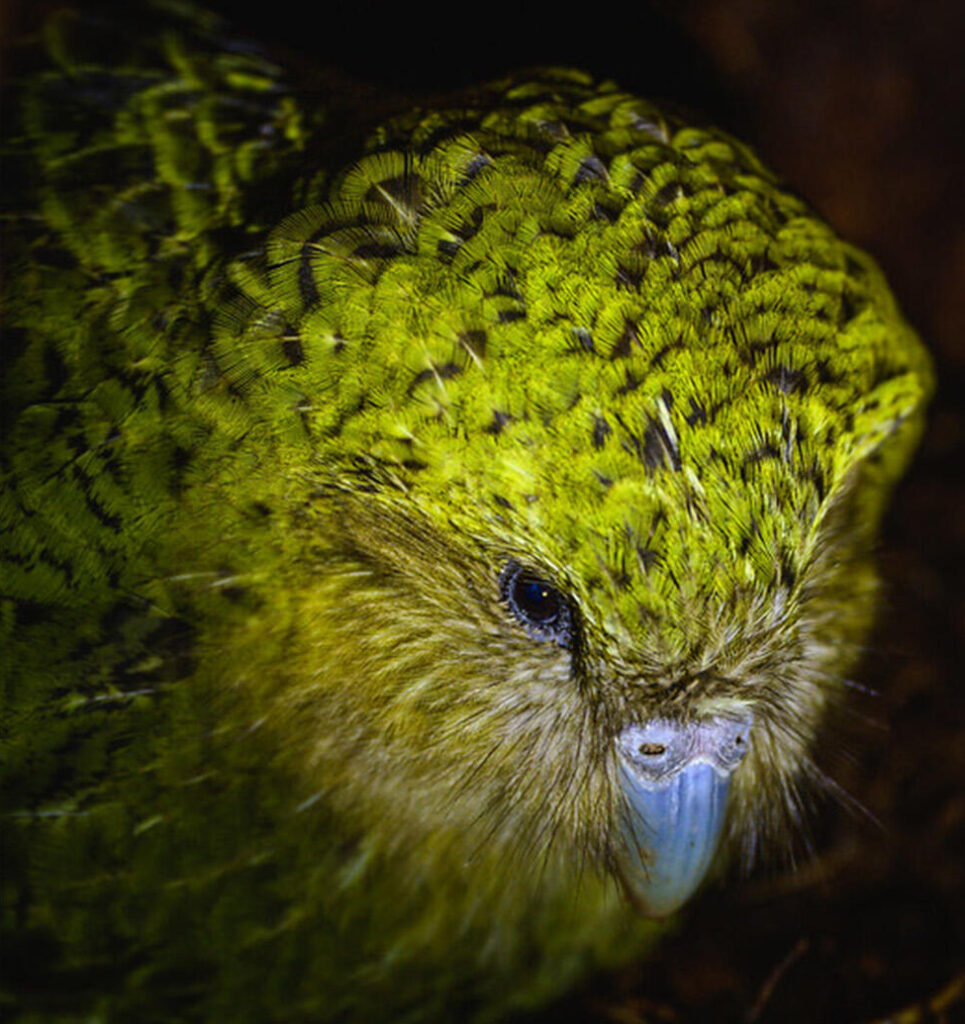
Photo credit: Jake Osborne – Kākāpō Margaret-Maree (discovered 1985). Via Auckland Zoo