Central Otago’s waterways are home to galaxiid species found nowhere else in the world. But trout predation and habitat loss have decimated populations of these freshwater fish – and Clutha flatheads are one of the most endangered species of all. Conservation efforts rely on locating remaining populations, but these elusive creatures are well-camouflaged and often difficult to spot using traditional surveying methods.
Using eDNA to locate flathead populations
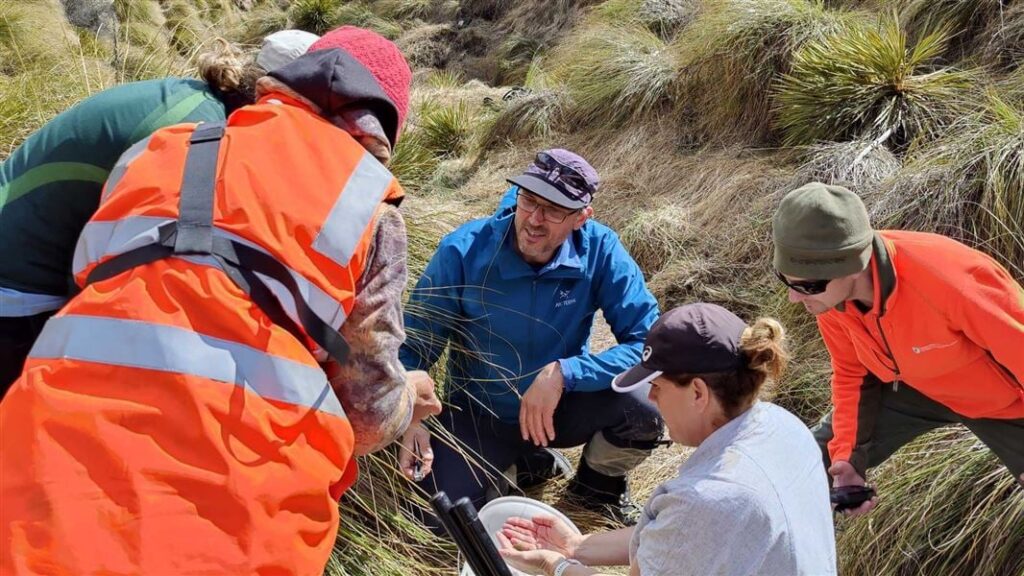
While surveying for Clutha flatheads in Tyre Gully, DOC River Ranger Chris Kavazos and his team collected a water sample for eDNA analysis. Astonishingly, Clutha flathead DNA was detected, indicating their presence in the water up to 5km upstream. Subsequent surveys confirmed the initial detection, and Chris believes the Tyre Gully population could be in the hundreds.
Saved by a waterfall
A small waterfall formed the only barrier between the flatheads and the downstream trout population. Following the eDNA detection, an adjustable fish barrier was put into place, alongside the removal of the trout downstream.
eDNA monitoring can serve as a crucial complement to traditional surveying methods, often providing the first indication of rare and elusive species that most need our help. Without eDNA monitoring, one of the few remaining populations of this critically endangered species may never have been discovered.
“Clutha flatheads are still dangerously close to extinction, but we now have the chance to save a population that could have become extinct without us knowing it was ever there.”
– Chris Kavazos, DOC
Read more about the discovery here.
Photo Department of Conservation | Te Papa Atawhai