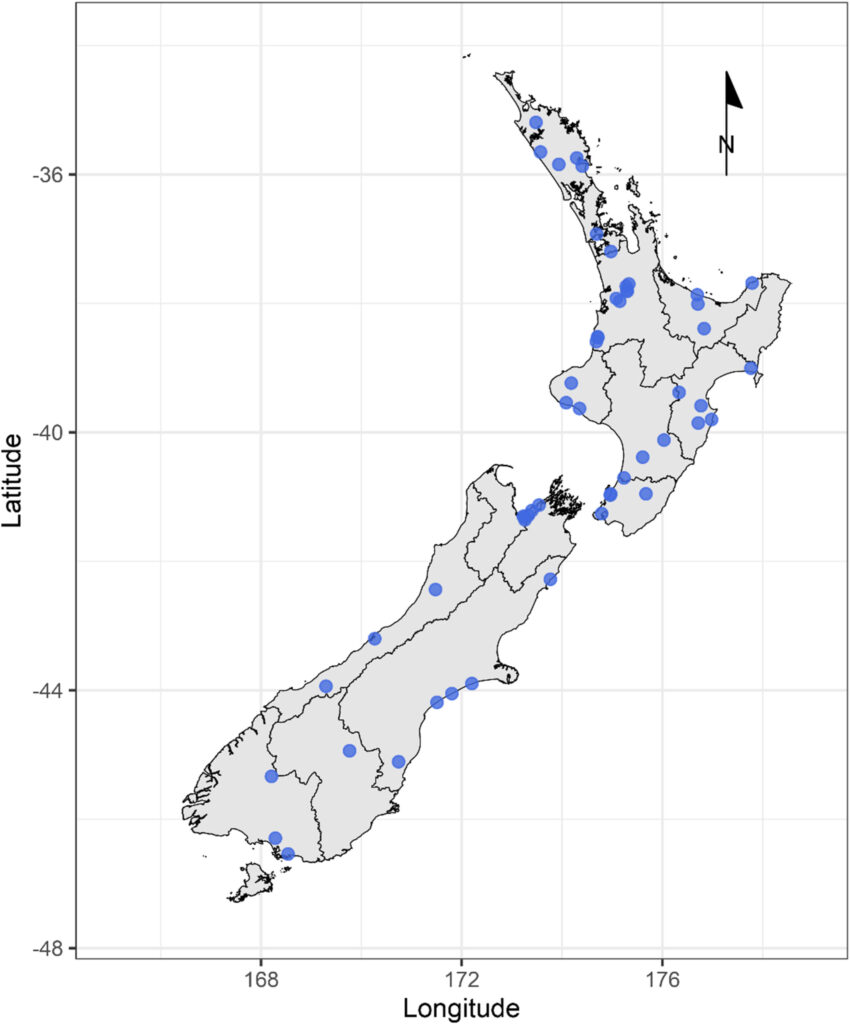
Environmental DNA (eDNA) is becoming a widely used tool for assessing biodiversity, but many agencies still question how well it matches traditional monitoring methods based on habitat sampling and morphological identification. Traditional surveys can be slow, costly, and difficult to scale across large regions, while eDNA offers faster processing and finer taxonomic precision. This study examined how closely eDNA-based ecological health assessments align with established biomonitoring techniques across 53 stream sites throughout Aotearoa New Zealand.
Because eDNA and benthic samples were not collected at the same time for most sites, the researchers compared eDNA results to the average community composition from previous traditional sampling events. They also adjusted eDNA detections to match the broader taxonomic levels typically used in conventional assessments, ensuring a fair comparison.
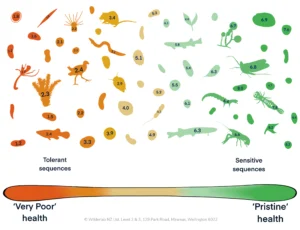
Across multiple analyses, the study found strong correlations between the ecological health patterns produced by eDNA and those produced by traditional biomonitoring. While eDNA tended to miss some taxa due to gaps in reference sequence databases, it still reproduced the same broad ecological gradients, including how stream communities respond to land use. Multivariate analyses showed that environmental and spatial drivers shaped community structure in similar ways across all three data types.
Overall, the results demonstrate that eDNA provides a reliable view of stream ecological health at a national scale. While it does not fully replace traditional monitoring, it complements existing approaches and offers a scalable, efficient method for tracking biodiversity and environmental change across large freshwater networks.
Read the full paper here.