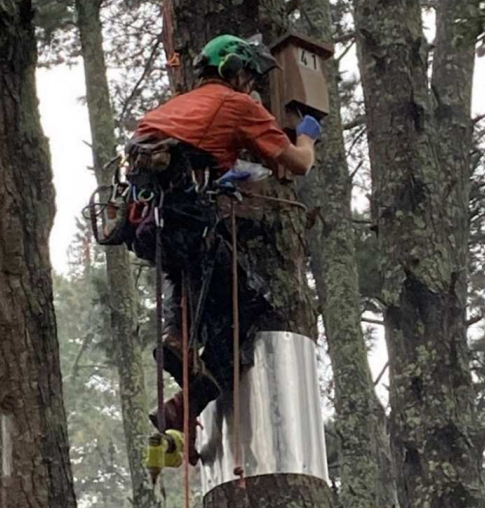
Bat boxes are often installed to offset the loss of mature trees that provide natural roosting sites for bats, but confirming whether bats actually use these boxes can be challenging. In Aotearoa New Zealand, long-tailed bats are elusive, and traditional monitoring methods often fail to detect them unless the bats are physically present during a survey. This study tested whether environmental DNA (eDNA) collected from inside bat boxes could provide a reliable way to confirm box use even when bats are absent at the time of inspection.
Researchers used swabs to collect eDNA from the interior surfaces of bat boxes deployed as part of Hamilton City Council’s mitigation efforts for the Southern Links Project. The eDNA analysis revealed that 25 out of 73 boxes (34 percent) showed evidence of long-tailed bat occupancy. Importantly, eDNA detected use even when occupancy was low or infrequent, demonstrating that this approach can capture brief or sporadic visits that would otherwise be missed by visual surveys.
These findings show that eDNA is a practical and effective tool for validating bat box use in New Zealand. It can help councils, ecologists, and conservation practitioners evaluate mitigation success, better understand bat behaviour, and refine strategies for supporting long-tailed bat populations in urban and semi-urban landscapes.
Read the full paper here.