Wetlands are among Aotearoa New Zealand’s most important ecosystems, supporting rich biodiversity and providing cultural, hydrological, and ecological services. Yet less than 10% of their original extent remains, and invasive species continue to threaten their stability and long-term health. Environmental DNA (eDNA) offers a powerful way to understand these complex environments, but wetland biodiversity patterns—especially the balance of exotic and native species—are still poorly described.
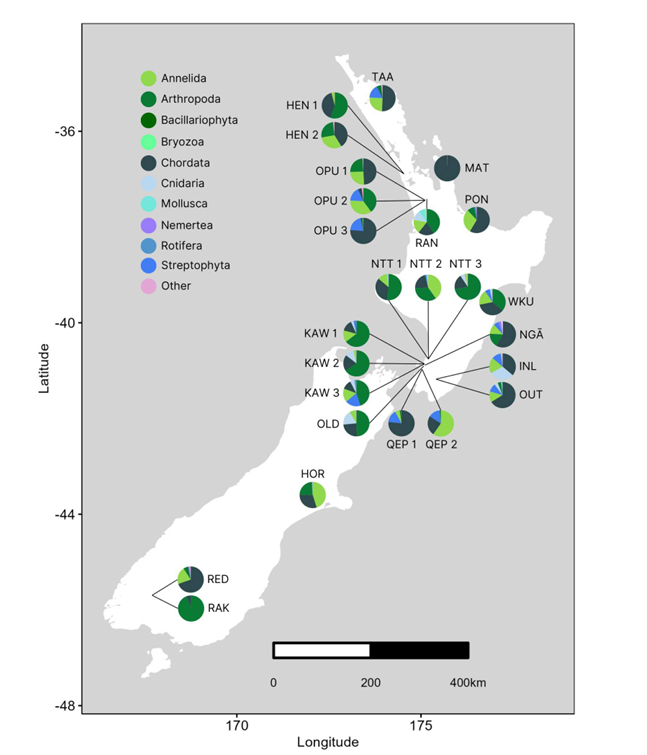
To explore this, researchers analysed the publicly available eDNA database curated by Wilderlab, drawing on data from 26 wetlands across the country. By examining detections across plants, animals, fungi, microbes, and other taxa, they characterised biodiversity patterns and assessed how many species were exotic versus non-exotic (native or endemic).
The results showed striking spatial variation in biodiversity, even between neighbouring sites. A consistent pattern also emerged: every wetland surveyed had species lists composed of at least 50% exotic taxa. While some wetlands supported high native diversity, exotic species were widespread and often dominant, reflecting ongoing pressures on these already reduced ecosystems.
The study demonstrates the value of open-access eDNA databases for revealing national-scale biodiversity trends and identifying areas of concern. It also highlights the urgent need for stronger investment in wetland conservation and restoration to protect Aotearoa New Zealand’s treasured native and endemic species and to ensure these ecosystems continue to support cultural and ecological wellbeing.
Read the full paper here.