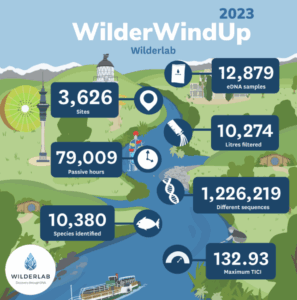
eDNA is changing the way we monitor and manage ecosystems in New Zealand – and a new national initiative is putting it to work at scale. Led by the Ministry for the Environment (MfE), with support from Wilderlab, the project is building one of the most comprehensive national eDNA datasets in the world.
From cyclones to stream health
When Cyclone Gabrielle hit New Zealand, MfE, the Department of Conservation, the EPA, and local councils used eDNA to assess the cyclone’s impact on river biodiversity. The approach allowed for fast, wide-reaching bioassessment in affected areas – something traditional methods could not have achieved at the same scale or speed.
eDNA data is also being used to score stream condition, identify native and invasive species, and support early biosecurity responses. Wilderlab’s end-to-end eDNA monitoring solution allows for efficient, scalable monitoring of biodiversity without the need for specialised training, bulky field equipment, or harmful and destructive sampling techniques.
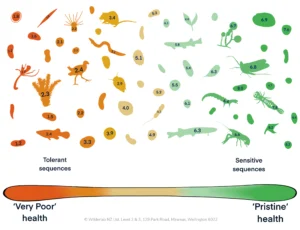
“eDNA is really cost-efficient. The same sample can provide information on fish, bugs, plants, rats, or deer – the list goes on. It can assess whether the system is dominated by native or exotic species, or by species that are pollution-tolerant or highly sensitive.”
– Michael Bates, MfE
What’s next?
Through their national uptake of eDNA monitoring, MfE is gaining valuable insights into biodiversity, ecosystem health, and the impacts of environmental events. We’re proud to support this work and to contribute to a deeper understanding of our natural world.
Next step: to make the data globally accessible on GBIF: The Global Biodiversity Information Facility. In the meantime, explore our publicly available national dataset.