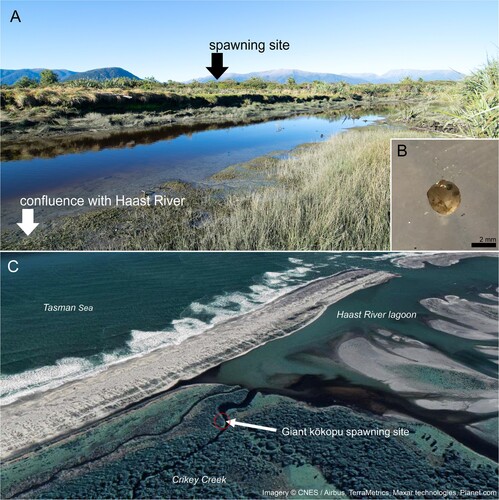
This paper documents the first known discovery of a giant kōkopu spawning site in a tidal waterway. The finding was made opportunistically through DNA barcoding from a single egg, showing how genetic tools can reveal important ecological events that might otherwise go unnoticed. Until now, only one giant kōkopu spawning location had been described, and it was far inland in a very different type of habitat.
At this newly discovered site, both giant kōkopu and īnanga were found spawning along the same section of riverbank. Their eggs occupied the same vertical elevation, and when combined with tidal height records and egg development stages, the evidence suggests that the spawning event was triggered by a tidal cue rather than freshwater conditions. This represents a significant shift in what is known about giant kōkopu breeding behaviour.
The study discusses the implications of giant kōkopu using tidal reaches more widely for spawning. Historically, many tidal areas have been modified or degraded, which may have contributed to population declines. Recognising tidal spawning habitats creates new opportunities for restoration and protection, and highlights how DNA-based methods can assist with species conservation by identifying important habitats that were previously overlooked.
Read the full paper here.