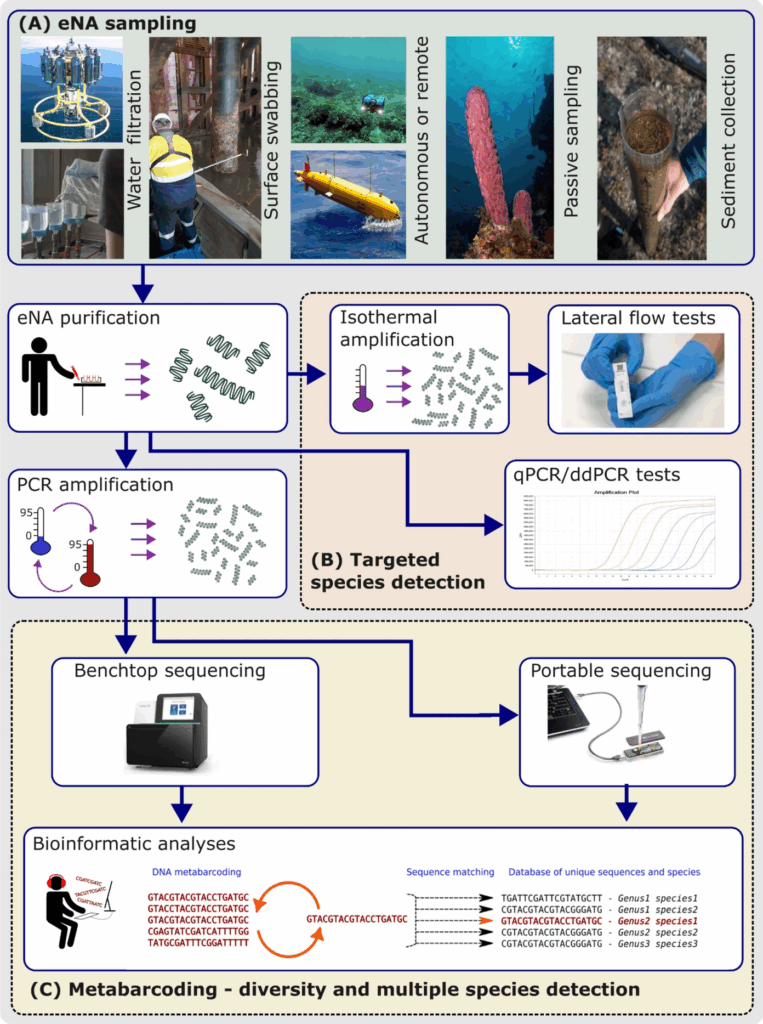
Invasive marine species (IMS) pose a major threat to coastal ecosystems, often spreading rapidly and causing ecological and economic damage. Because these species are difficult to remove once established, early detection is one of the most effective tools for managing their impacts. Environmental DNA and RNA (together called environmental nucleic acids, or eNA) have emerged as powerful methods for detecting IMS quickly, sensitively, and cost-efficiently. However, the field is still evolving, and researchers and managers need clarity on where to focus next.
This study gathered insights from marine biosecurity experts and researchers across Australia and New Zealand to identify the key knowledge gaps and research priorities for improving IMS detection using eNA. These expert perspectives were combined with a review of current scientific literature to evaluate how well existing tools perform, where they fall short, and what advances are needed to make eNA approaches more robust and operational for routine biosecurity use.
The synthesis revealed several priority areas, including improving reference databases for target species, refining workflows to reduce false positives and negatives, understanding how DNA and RNA behave in different marine environments, and developing faster, more portable detection systems. The study also emphasises the importance of collaboration between researchers, managers, and policy makers to ensure that scientific advancements translate into practical tools that support effective marine biosecurity.
Overall, this work outlines a clear research roadmap for strengthening eNA-based surveillance, helping coastal nations build better early-warning systems for invasive marine species.
Read the full article here.